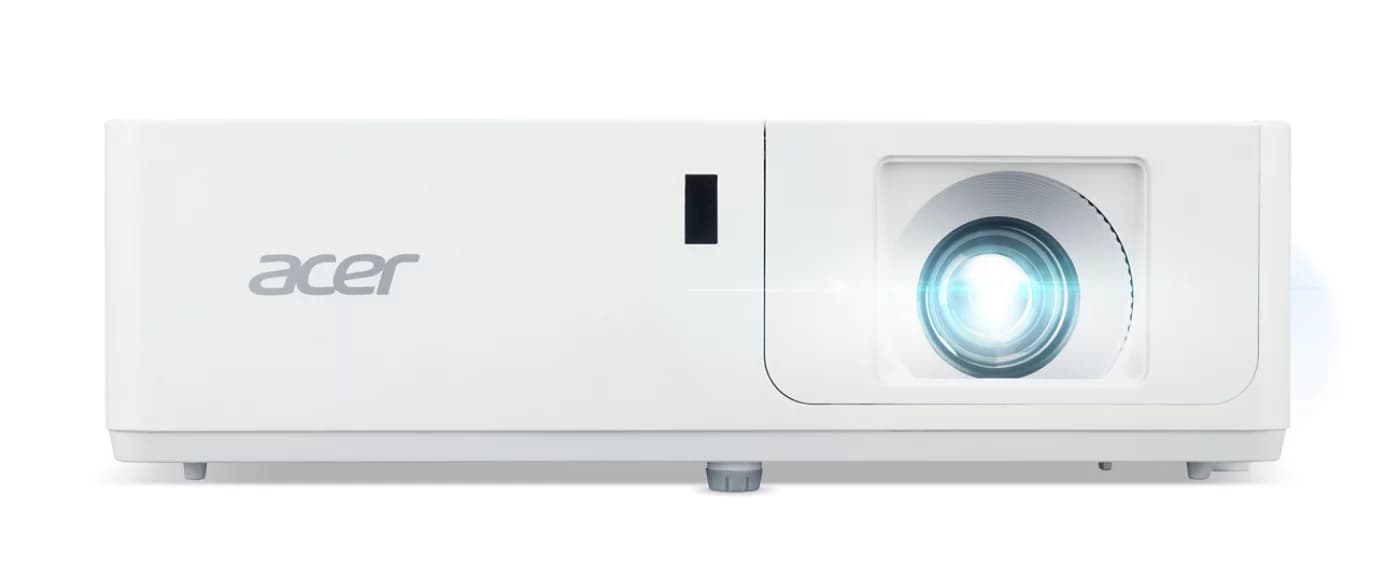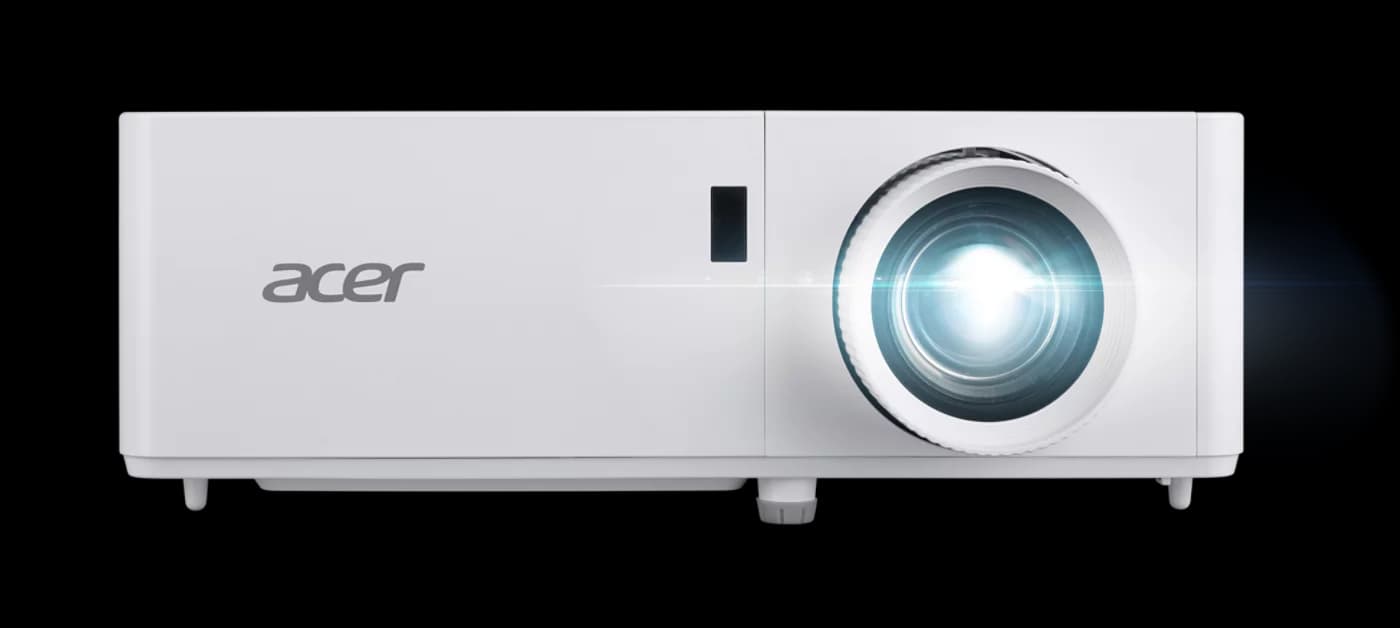
Buy laser for anything that gets installed and left. A lamp projector is cheaper on the day and more expensive by the end: the lamp is a consumable that dims steadily, then fails, and someone has to get up a ladder to change it. A laser light source has no consumable at all, so once it is on the wall the only maintenance is cleaning a filter. The case for lamp is now narrow, and it is about budget timing rather than picture quality.
That is not just our view, it is what the market now looks like. Of the 377 projectors here that publish their light source, 273 are laser, 71 are lamp and 33 are LED, so laser accounts for about 72 percent. Manufacturers have moved their installation ranges across almost entirely, and several no longer develop new lamp models at all. Where a lamp projector still appears it is usually an entry-level or portable unit competing purely on purchase price.
| Laser | Lamp | |
|---|---|---|
| Rated life | 20,000 to 30,000 hours | 3,000 to 5,000 hours typical |
| Consumables | None | Replacement lamp, plus the labour to fit it |
| Brightness over life | Gradual, to roughly half by end of life | Noticeably dimmer within the first 1,000 hours |
| Warm-up and cool-down | Seconds, and can be power-cycled freely | Minutes, and cutting power early shortens lamp life |
| Orientation | Any, including vertical and portrait | Usually restricted by the lamp's design |
| Purchase price | Higher | Lower |
Lamp life figures are the manufacturer's normal-mode ratings. Eco modes extend them considerably but at reduced brightness, which reopens the question the lumen calculation was meant to settle.
The median rated life across the products here that state one is 20,000 hours. Put that against real use and the number stops being abstract. A classroom projector running six hours a day across a 190-day teaching year does about 1,140 hours annually, so a median laser engine lasts roughly 18 years, which is beyond most refresh cycles. A meeting room at four hours a day over a 240-day working year does about 960 hours, or roughly 21 years. In both cases the projector is likely to be replaced for other reasons long before the light source runs out.
Run the same arithmetic on a lamp and the picture inverts. At 1,140 hours a year, a 4,000 hour lamp needs replacing roughly every three and a half years. Over a ten-year life that is two or three lamps, each costing a meaningful fraction of a new projector, plus an engineer visit and a room out of use while it happens. Multiply by an estate of thirty rooms and the difference stops being a line item and becomes a budget. This is the calculation that matters, and it is the one a purchase-price comparison hides.
- Choose laser for anything ceiling-mounted, anything in a multi-room estate, and anything where getting access means scaffolding or a lift.
- Choose laser where the projector is switched on and off repeatedly through the day, because lamps dislike it and lasers do not care.
- Consider lamp only for occasional or portable use, or where capital budget is fixed this year and there is no maintenance budget to protect.
- Treat LED as a third option rather than a compromise: long-lived and excellent on colour, but generally lower output, so check it against your lumen requirement first.
One caveat worth stating plainly, because it is usually left out. Laser projectors dim too. They simply do it gradually and predictably rather than failing, and the rated life is normally quoted as the point at which output has fallen to half. That is why the lumen calculation should be done with headroom rather than at the exact figure: a projector specified with no margin will be under-bright long before it is broken, and nothing about a laser engine prevents that.
Higher-output laser models in stock now, for halls, lecture theatres and anywhere the lights stay on: